Foundations and learning approach
Start with objects
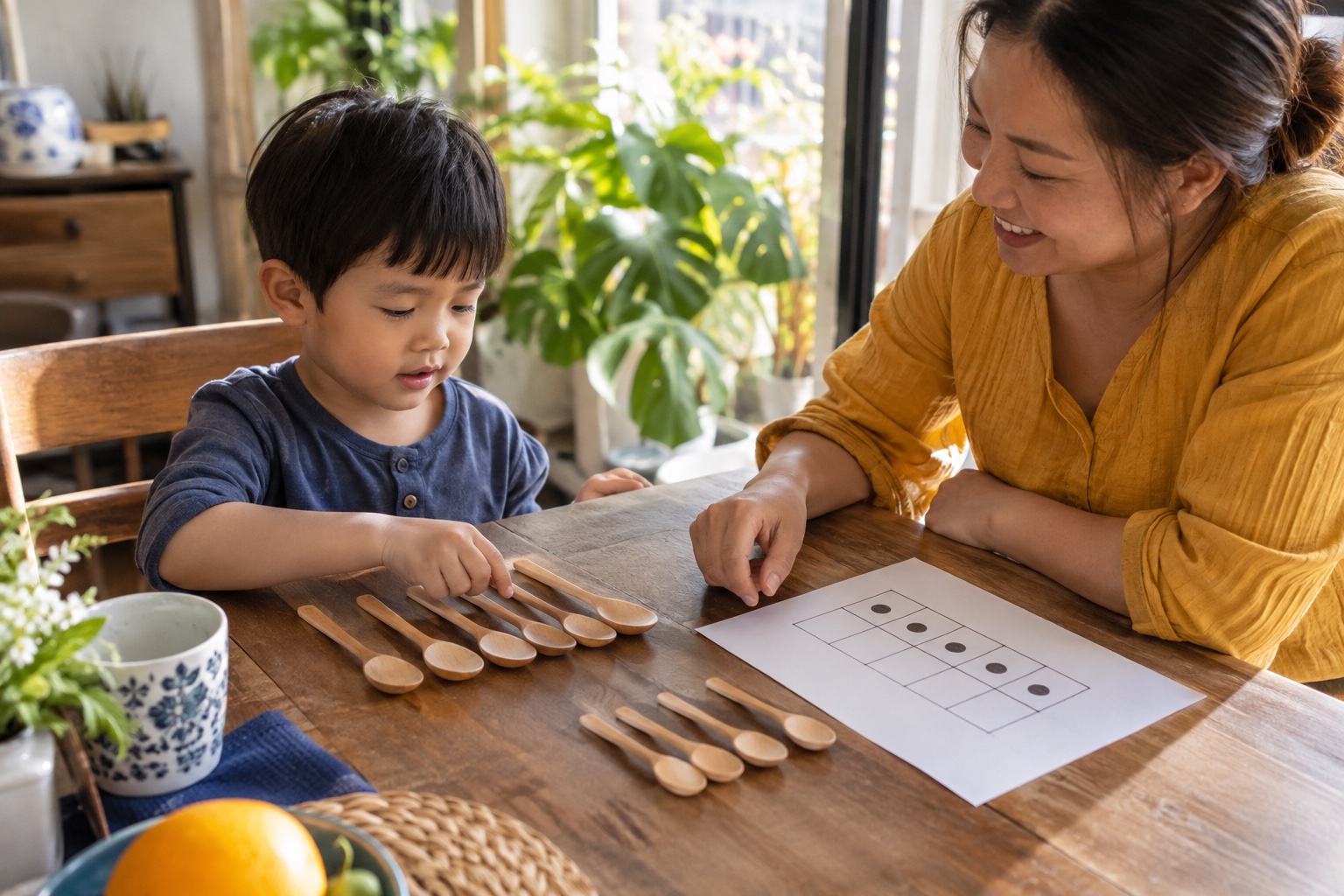
Put out 6 spoons and add 4 more. Invite your child to arrange them and explain the total. Observe whether they count, split or pair the objects before suggesting a method.
Represent the objects with a picture
Draw 6 dots and 4 more, or use a ten frame. Ask which part represents each group of spoons. The picture should explain the relationship, rather than merely decorate the work.
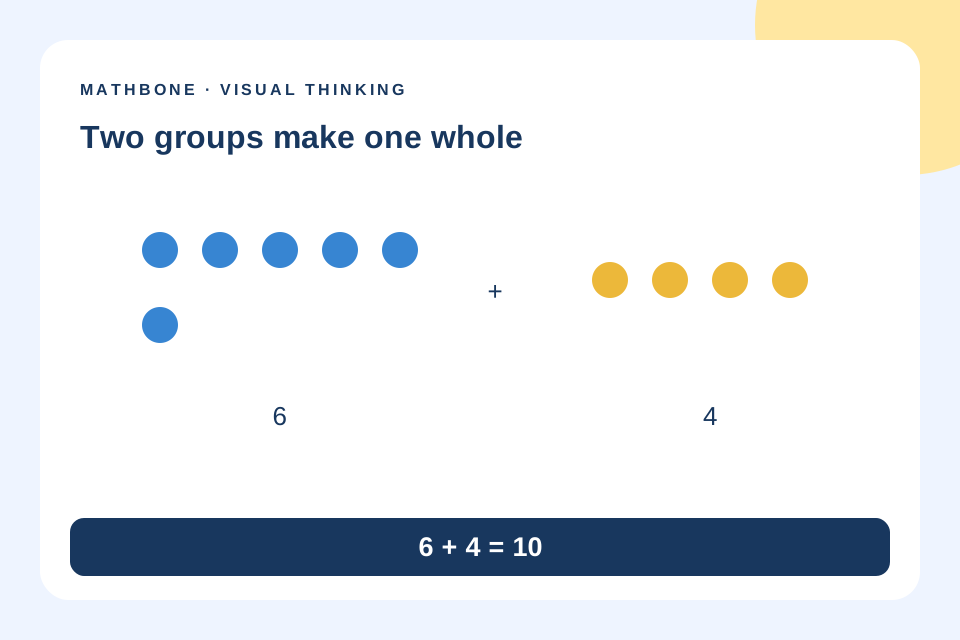
Blue dots represent 6 spoons and yellow dots represent 4 more. The picture and equation describe the same quantities.
View larger image ↗Connect the model to symbols
Write 6 + 4 = 10 and ask where each number comes from. Return to the picture or objects if needed. CPA connects concrete objects, pictorial models and abstract symbols.
ONE IDEA · THREE REPRESENTATIONS
Explore one problem through CPA
Explore with objects
Place 6 spoons and add 4 more. Let your child arrange and count them.
Represent the relationship
Draw 6 dots and 4 more. Ask which dots represent each group of spoons.
Connect to mathematical symbols
Write 6 + 4 = 10 and discuss what 6, 4, the plus sign and 10 mean.
Ask your child to identify how the objects, picture and numbers represent the same quantities. Return to objects or pictures when the connection is unclear.
Read more: NIE · Singapore Primary Mathematics: CPA ↗
Keep exploring together
Choose activities that match the learner’s knowledge and readiness, and discuss what you notice. Explore the curriculum or parent guide below.