
SINGAPORE MATH · CONCRETE · PICTORIAL · ABSTRACT
Understand the relationship before applying a formula
At primary level, CPA in Singapore mathematics connects objects, pictures and symbols, such as bar models for fractions or differences. Secondary articles develop reasoning through models, graphs and equations. Each article gives a clear problem and explains how its solution follows.
Read more: NIE · Singapore Primary Mathematics: CPA ↗
Stage labels guide reading choices. Start with familiar ideas and build towards more challenging work.
Primary: visual models and multi-step problems
9 articles
Upper primary · Fractions
Fractions of fractions: how much of a 3/4 m ribbon remains?
Start with equal parts, then solve a multi-step problem and identify the whole at each step.
Read article ↗
Upper primary · Multi-step problems
Equal after a transfer: use a bar model to find the original amounts
When one amount falls and the other rises, how does the gap change? Model it before calculating.
Read article ↗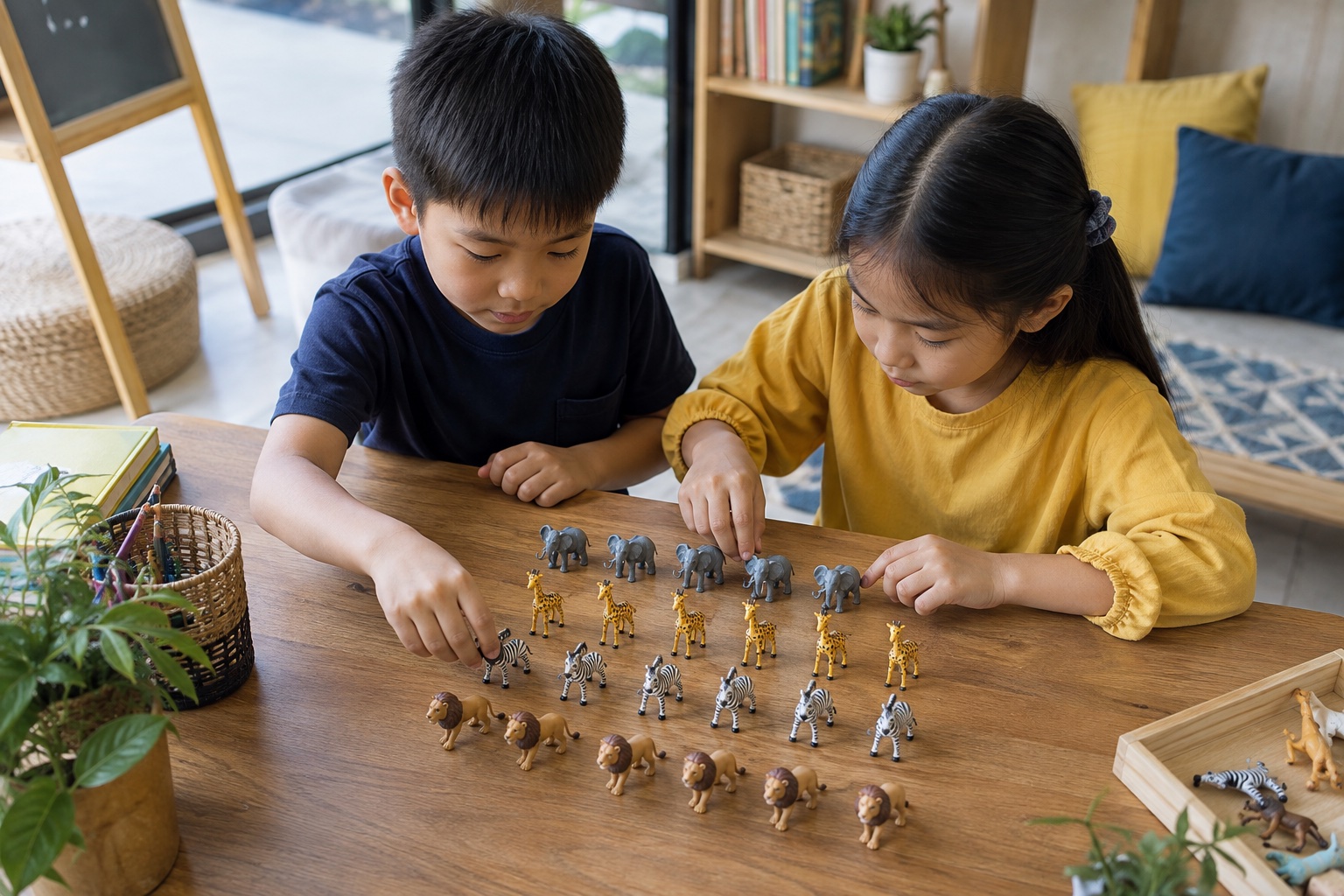
Multiplication
See multiplication through rows and columns
Arrange equal groups and connect them with multiplication.
Read article ↗
Upper primary · Ratios and units
A 2 : 5 ratio and a 1.4 L mixture: find each amount
Connect a ratio, fractions of a total and litre-to-millilitre conversion in one problem.
Read article ↗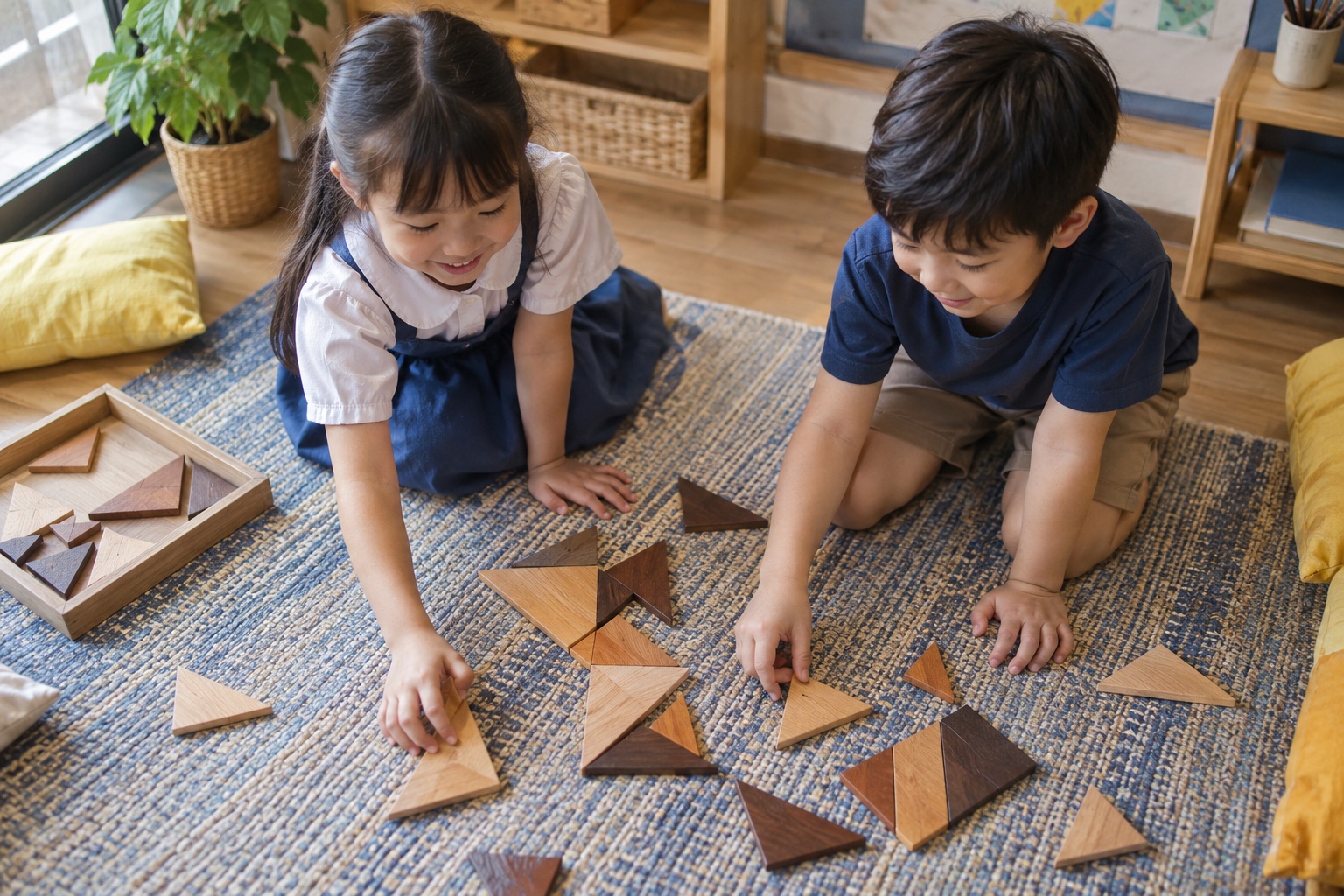
Shapes and reasoning
What can rotation and reflection help us explore?
Explore position, comparison and change through a short visual game.
Read article ↗
Measurement
Where should a ruler measurement begin?
Length is a distance, not just the number beside an object’s end.
Read article ↗
Time
Connect telling time with everyday routines
Use a clock and timeline to explore starting times and elapsed time.
Read article ↗
Everyday mathematics
A pretend shop for money and change
Connect prices, payment and differences through pretend play.
Read article ↗
Upper primary · Decimals
Why does 7.5 bottles mean you need 8?
Calculate capacity with decimals, then interpret the result as a whole number of bottles.
Read article ↗Secondary: algebra, graphs and reasoning
9 articles
Lower secondary · Simultaneous equations
Two conditions, one solution: simultaneous equations
Understand the intersection before eliminating a variable.
Read article ↗
Lower secondary · Quadratics
Factoring and graphs: why are there two solutions?
Connect x² − 4x + 3 with its factors, intercepts and minimum.
Read article ↗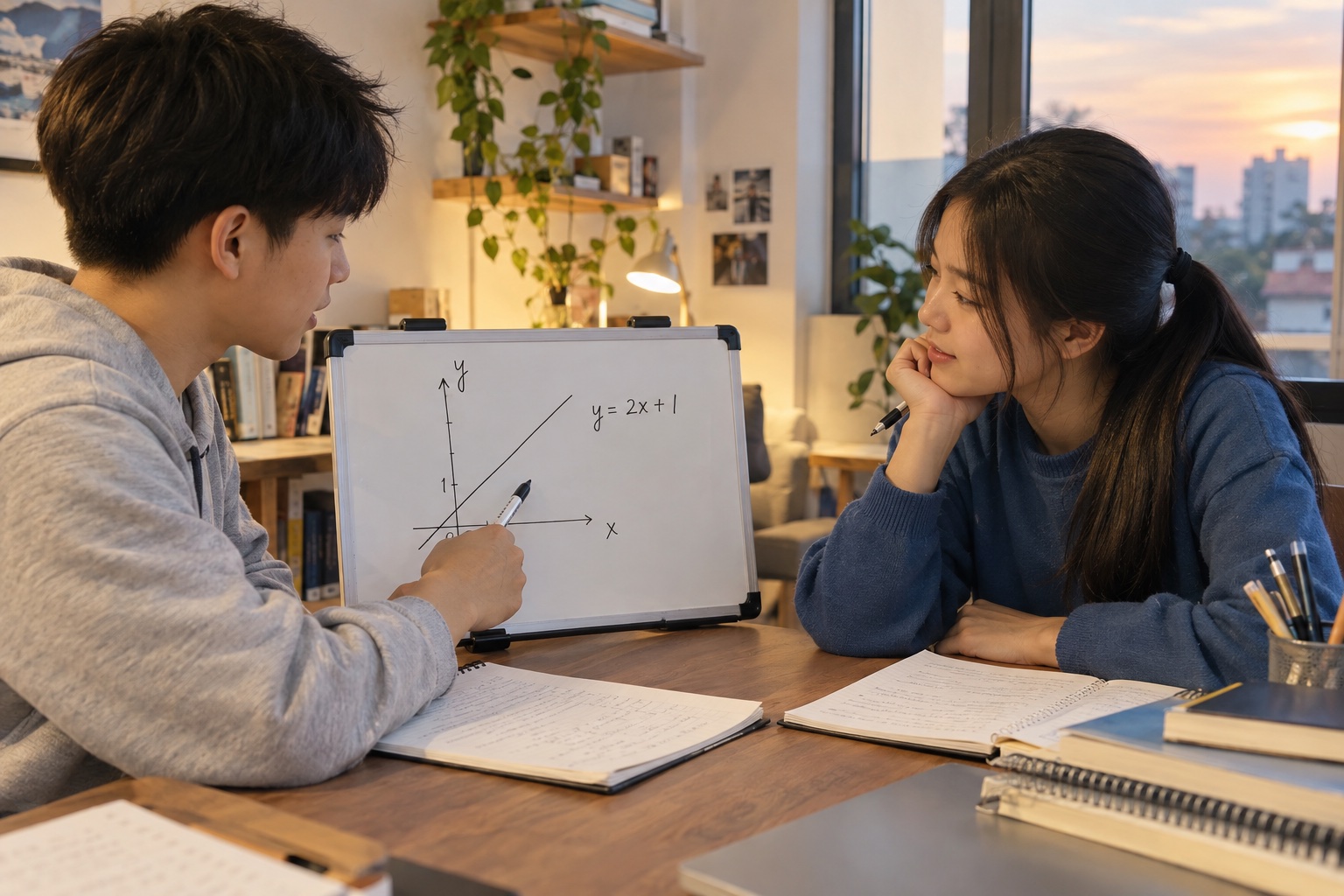
Mathematics for older learners
Making sense of algebra through models
Connect a simple situation with words, variables and a graph before increasing complexity.
Read article ↗
Graphs and data
Before interpreting a graph, read the axes
Check units, range and scale before drawing a conclusion.
Read article ↗
Advanced mathematics
Derivatives begin with “How fast is it changing?”
Connect a graph, its slope and a rate of change.
Read article ↗
Lower secondary · Equations
Solve 3(2x − 1) = 4x + 9 and justify each step
Connect a balance model with expanding brackets and checking by substitution.
Read article ↗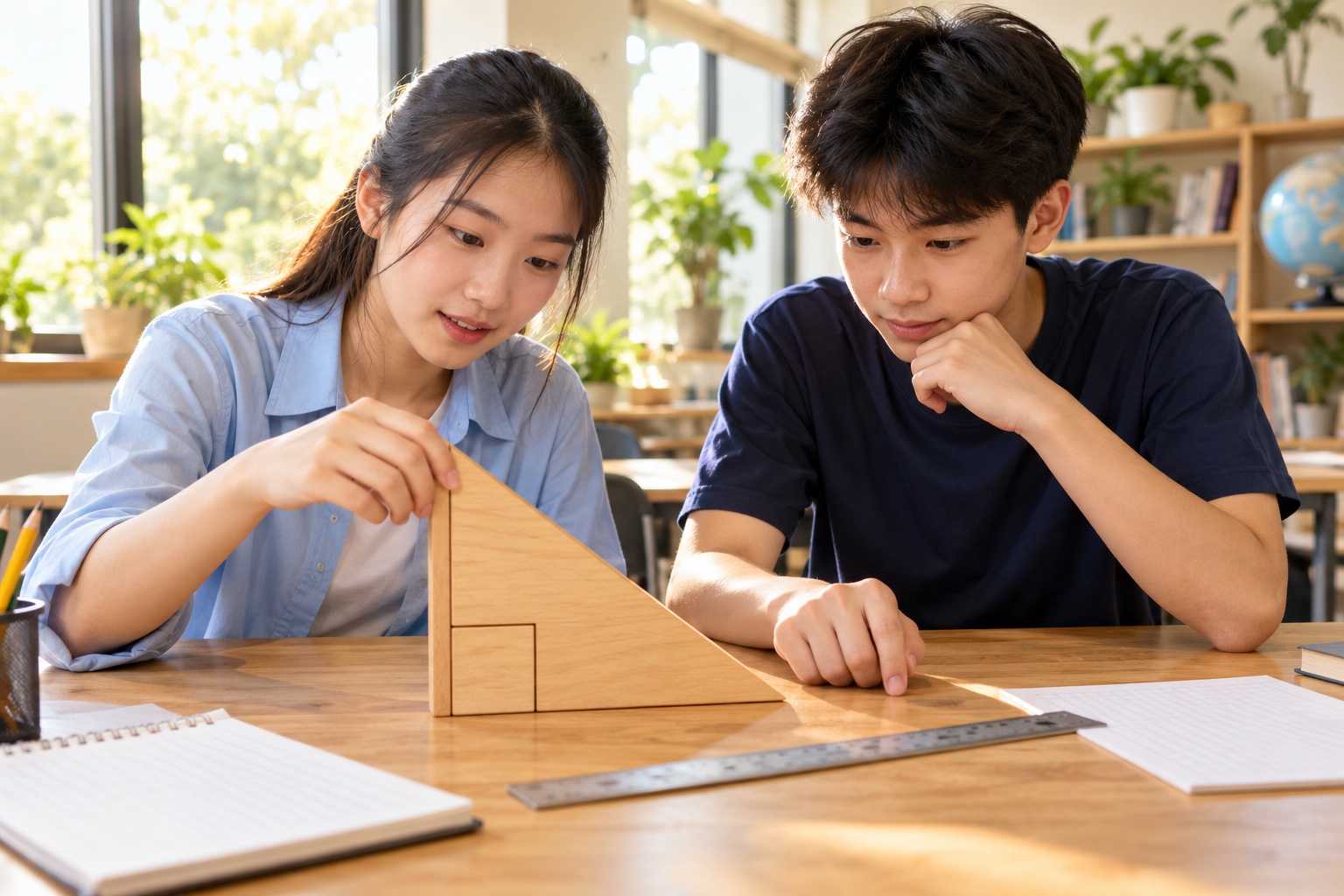
Lower secondary · Geometry
Find a missing side and connect it to area
Identify the hypotenuse before applying a² + b² = c².
Read article ↗
Lower secondary · Probability
Drawing without replacement: why does the second chance change?
Use a tree diagram to follow outcomes and multiply along a path.
Read article ↗
Lower secondary · Statistics
Mean or median: which better describes the data?
Use one data set to see how an unusually large value affects summaries.
Read article ↗Foundations and learning approach
8 articles
Singapore Math · CPA
CPA in Singapore Math: from objects to pictures and equations
Connect three representations of one idea with a practical 8 + 5 example.
Read article ↗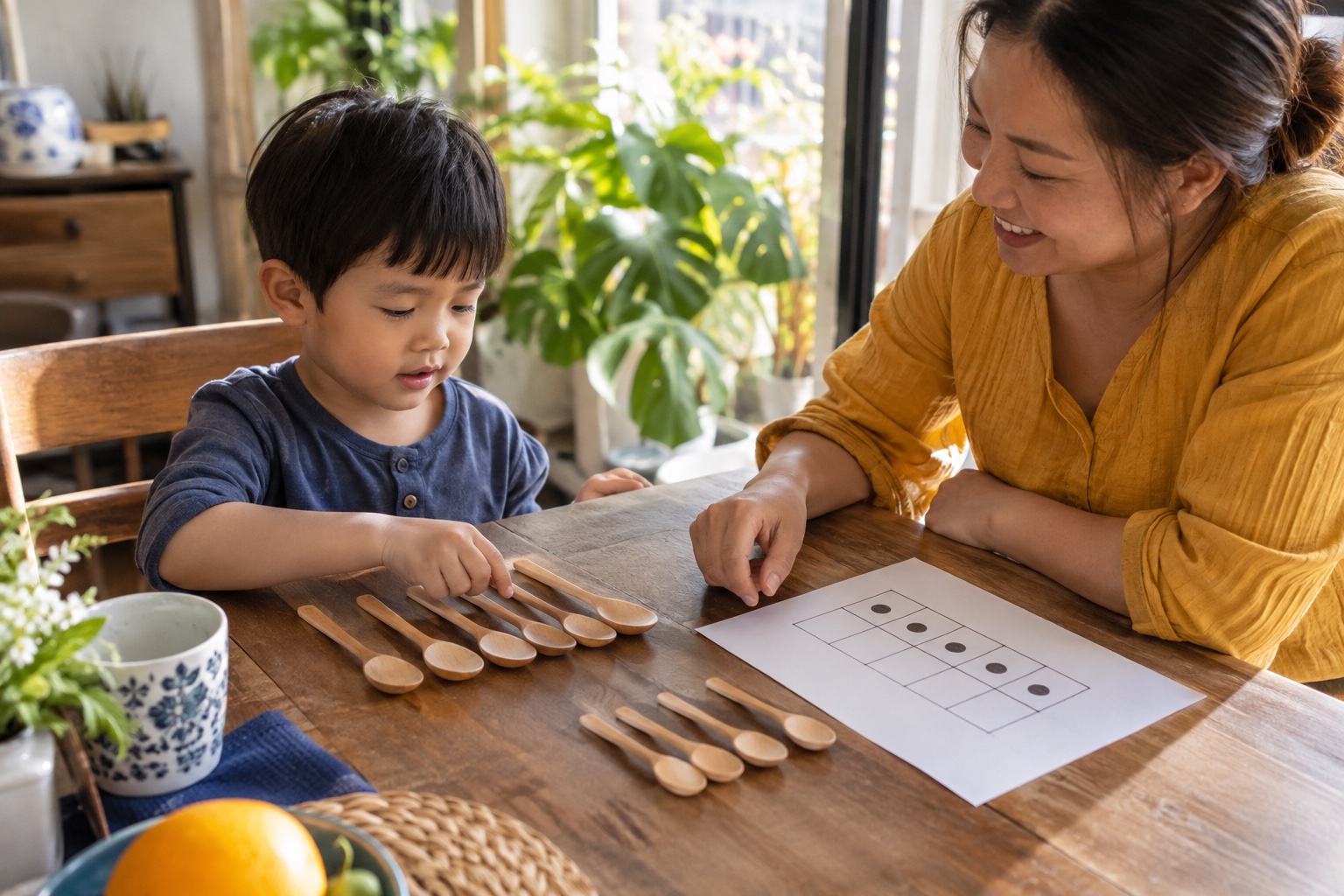
The CPA approach
From objects to equations: CPA at home
Connect everyday objects, drawings and a short equation to the same idea.
Read article ↗
Numbers and addition
Why does making ten help with addition?
Use a ten frame to see a missing part before connecting it to addition.
Read article ↗
Thinking with models
One number, many number bonds
Connect parts with the whole through objects and a simple diagram.
Read article ↗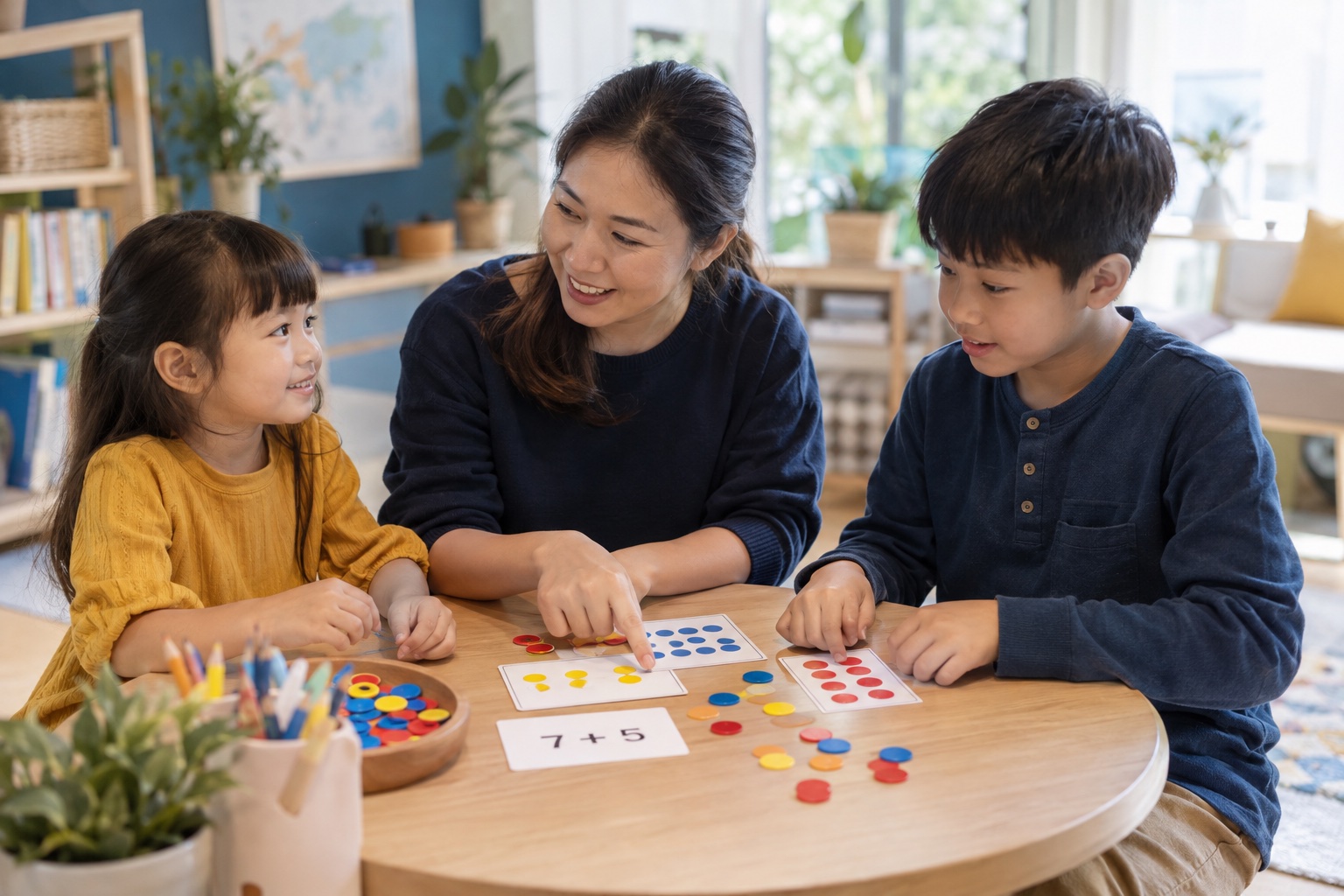
Curriculum
How do you choose a starting level?
Age offers a guide; prior knowledge and readiness make the conversation more useful.
Read article ↗
For parents
Three questions to ask after a mistake
Use a difficult moment for reflection while keeping the thinking with your child.
Read article ↗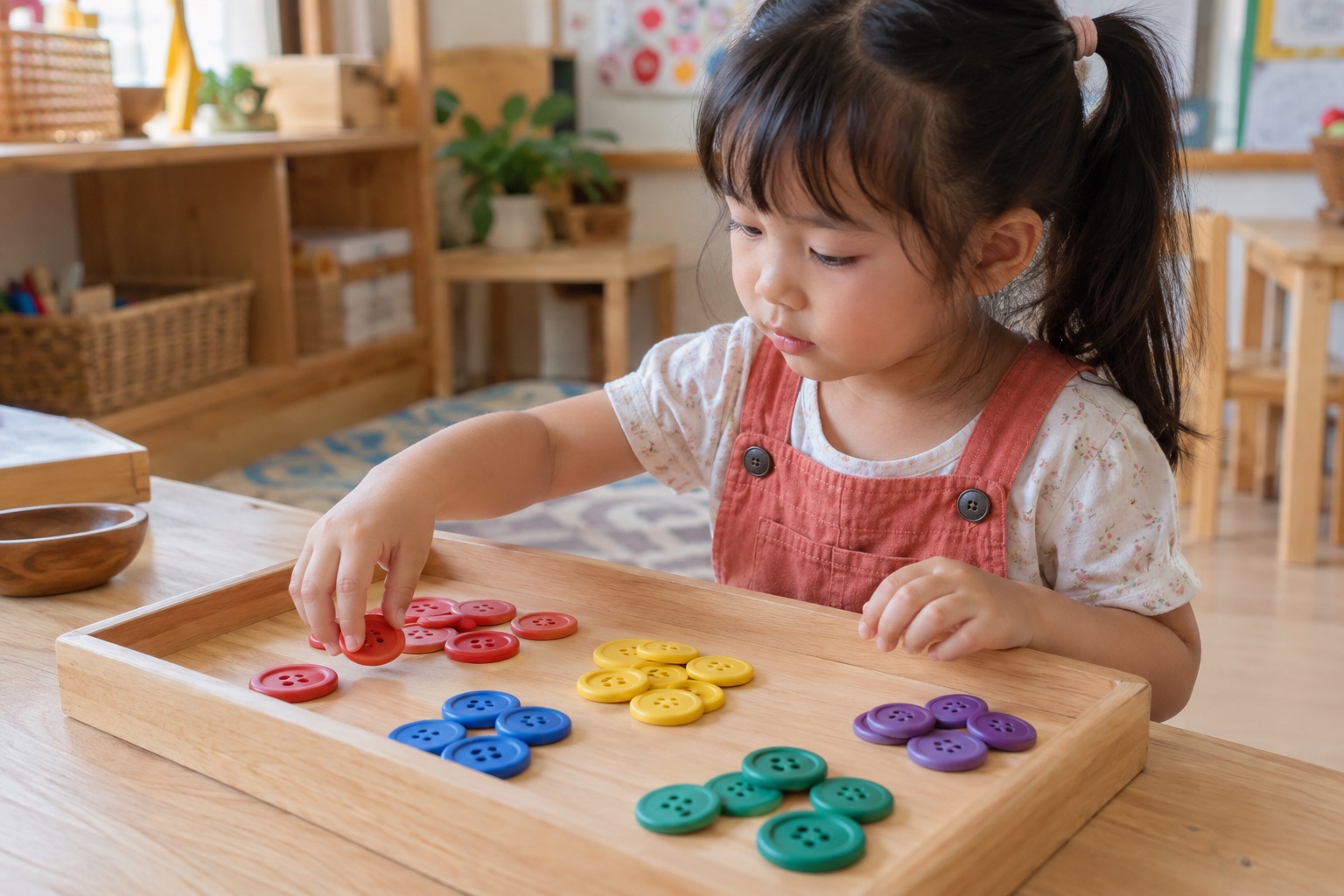
Early learning
Everyday objects make counting meaningful
Match objects one by one and explore what the final count means.
Read article ↗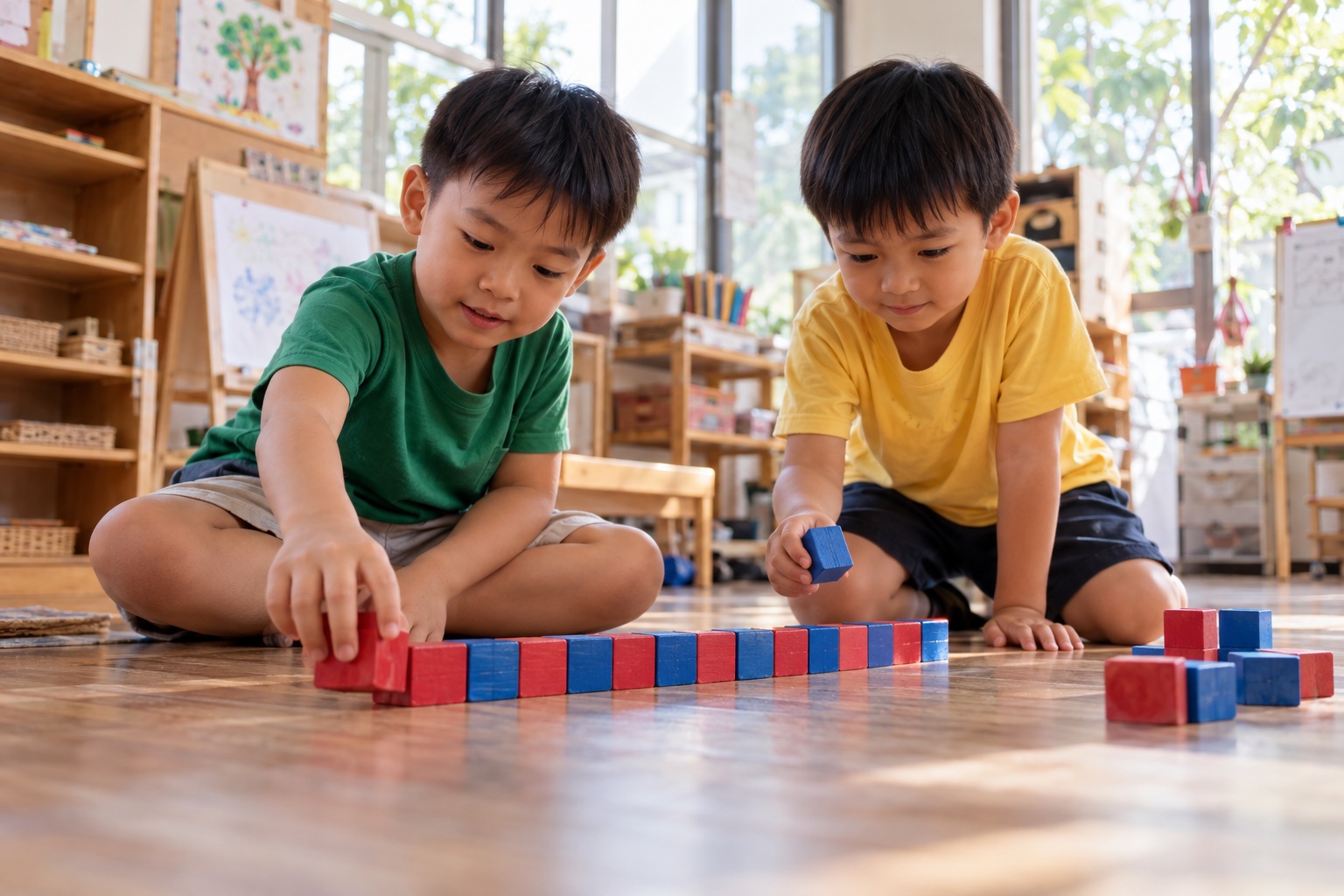
Patterns
Find the rule before guessing what comes next
Explore colours and shapes before connecting to number patterns.
Read article ↗