





 All 5 missions explored!


Pre Level to Level 14
What does each level cover?
Open each level to explore its key topics, from foundations at age 4 to advanced mathematics.
Pre Level to Level 2
Build foundations through exploration
Pre Level Foundations of mathematical thinking Age guide: 4 years · 48 core booklets
Key learning topics
- Matching and sorting
- Numbers 1–3
- Numbers 0–5
- Shapes and picture composition
- Positions and routes
- AB patterns
- Comparing sizes
- Sequencing events
- Parts and wholes
- Play and application
Thinking to practise
Describe similarities and differences and group objects by observed features.
Illustrative practice linked to the curriculum, not guaranteed outcomes. Learners progress at different paces.Level 1 Numbers to 10 and number relationships Age guide: 5 years · 48 core booklets
Key learning topics
- Matching by criteria
- Numbers 0–10
- Comparing and ordering numbers
- Part–whole relationships
- Addition and subtraction stories
- Shapes and rotation
- Different types of patterns
- Measurement and position
- Picture data
- Application and review
Thinking to practise
Represent splitting and combining numbers up to 10 using pictures or objects.
Illustrative practice linked to the curriculum, not guaranteed outcomes. Learners progress at different paces.Level 2 Solve problems with numbers and explain thinking Age guide: 6 years · 48 core booklets
Key learning topics
- Numbers 0–10 and counting sequences to 20
- Splitting and combining numbers
- Number stories and equal sharing
- Sorting by two criteria
- Patterns
- Shapes and grids
- Non-standard measurement
- Position and sequence
- Picture data
- Application and readiness
Thinking to practise
Choose counting, partitioning or pictures to explain a short problem.
Illustrative practice linked to the curriculum, not guaranteed outcomes. Learners progress at different paces.Level 3 to Level 5
Connect numbers with problem solving
Level 3 Numbers to 100 and basic calculation Age guide: 7 years · 48 core booklets
Key learning topics
- Numbers and place value
- Addition and subtraction within 10
- Ordinal numbers
- Addition and subtraction within 20
- Addition and subtraction within 100
- Introduction to multiplication and division
- Money
- Length
- Time
- Shapes and grids
- Picture data
- Integrated activities
Thinking to practise
Connect tens and ones with addition and subtraction up to 100.
Illustrative practice linked to the curriculum, not guaranteed outcomes. Learners progress at different paces.Level 4 Numbers to 1,000 and multi-step problems Age guide: 8 years · 48 core booklets
Key learning topics
- Reviewing and connecting foundations
- Numbers and patterns
- Three-digit addition and subtraction
- Multiplication and division
- Introduction to fractions
- Money and change
- Length, mass and capacity
- Time
- Two- and three-dimensional shapes
- Picture data and scales
- Integrated activities
Thinking to practise
Read a multi-step problem, identify known information and order the calculations.
Illustrative practice linked to the curriculum, not guaranteed outcomes. Learners progress at different paces.Level 5 Numbers to 10,000 and applied mathematics Age guide: 9 years · 48 core booklets
Key learning topics
- Numbers to 10,000
- Four-digit addition and subtraction
- Multiplication, division and multi-step problems
- Money and budgeting
- Bar charts
- Fractions
- Measurement units
- 24-hour time
- Angles and lines
- Area and perimeter
- Integrated activities
Thinking to practise
Connect calculations with money, measurement, area and graph data.
Illustrative practice linked to the curriculum, not guaranteed outcomes. Learners progress at different paces.Level 6 to Level 8
Discover mathematical relationships
Level 6 Fractions, decimals and geometry Age guide: 10 years · 48 core booklets
Key learning topics
- Numbers to 100,000
- Factors and multiples
- Multi-digit multiplication and division
- Fractions and mixed numbers
- Understanding decimals
- Decimal calculations
- Tables and graphs
- Angles and construction
- Quadrilaterals
- Views and nets
- Symmetry
- Integrated activities
Thinking to practise
Use visual models to explain fractions, decimals and geometric properties.
Illustrative practice linked to the curriculum, not guaranteed outcomes. Learners progress at different paces.Level 7 Percentages, rates and modelling Age guide: 11 years · 48 core booklets
Key learning topics
- Numbers and order of operations
- Fractions and mixed numbers
- Decimals and units
- Percentages
- Unit rates
- Angles and shape properties
- Area
- Volume
- Integrated activities
Thinking to practise
Choose models to explain percentages, rates and measurement problems.
Illustrative practice linked to the curriculum, not guaranteed outcomes. Learners progress at different paces.Level 8 Ratios and introductory algebra Age guide: 12 years · 48 core booklets
Key learning topics
- Dividing fractions
- Ratios
- Reverse percentages
- Introductory algebra
- Circles
- Composite shapes and angles
- Finding missing dimensions from volume
- Averages
- Integrated activities
Thinking to practise
Connect ratio with percentages and begin using variables for unknown quantities.
Illustrative practice linked to the curriculum, not guaranteed outcomes. Learners progress at different paces.Level 9 to Level 11
Use algebra and reasoning
Level 9 Algebra, equations and graphs Age guide: 13 years · 48 core booklets
Key learning topics
- Numbers and estimation
- Algebraic language and patterns
- Linear equations
- Coordinates and graphs
- Ratios, percentages and rates
- Angles and construction
- Area, volume and surface area
- Collecting and presenting data
- Integrated activities
Thinking to practise
Write equations from situations and explain relationships with graphs.
Illustrative practice linked to the curriculum, not guaranteed outcomes. Learners progress at different paces.Level 10 Quadratic algebra and introductory trigonometry Age guide: 14 years · 48 core booklets
Key learning topics
- Expansion and factorisation
- Algebraic fractions and formulas
- Inequalities and simultaneous equations
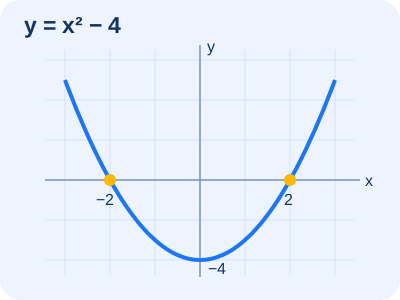
- Quadratic equations and graphs
- Variation and scale
- Congruence and similarity
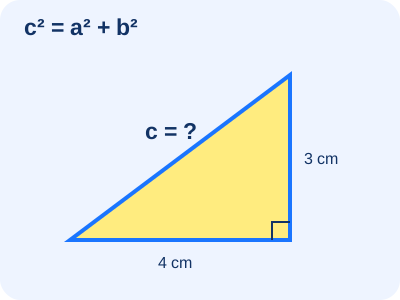
- Pythagoras and trigonometry
- Three-dimensional solids
- Probability and statistics
- Integrated activities
Thinking to practise
Connect factorisation, quadratic equations and features of graphs.
Illustrative practice linked to the curriculum, not guaranteed outcomes. Learners progress at different paces.Level 11 Functions, trigonometry and reasoning Age guide: 15 years · 48 core booklets
Key learning topics
- Indices and standard form
- Further quadratics
- Functions and gradients
- Coordinate geometry
- Applied trigonometry
- Circle theorems
- Radians and circle sectors
- Cumulative frequency and spread
- Integrated activities
Thinking to practise
Use functions and trigonometry to explain relationships and check conditions.
Illustrative practice linked to the curriculum, not guaranteed outcomes. Learners progress at different paces.Level 12 to Level 14
Progress to advanced mathematics
Level 12 Bridge to advanced mathematics Age guide: 16 years · 48 core booklets
Key learning topics
- Sets
- Matrices
- Two-dimensional vectors
- Probability and financial mathematics
- Preparatory algebra and coordinate geometry
- Preparatory trigonometry
- Preparation for calculus
Thinking to practise
Connect algebra with vectors, matrices and preparation for calculus.
Illustrative practice linked to the curriculum, not guaranteed outcomes. Learners progress at different paces.Level 13 Functions, vectors and differentiation Age guide: 17 years · 48 core booklets
Key learning topics
- Calculus and motion
- Functions and equations
- Sequences and series
- Complex numbers
- Vectors and three-dimensional geometry
- Differentiation and Maclaurin expansions
Thinking to practise
Use derivatives to explain rates of change and function-based problems.
Illustrative practice linked to the curriculum, not guaranteed outcomes. Learners progress at different paces.Level 14 Calculus, probability and advanced statistics Age guide: 18 years · 48 core booklets
Key learning topics
- Integration and differential equations
- Counting and probability
- Random variables and binomial distributions
- Normal distributions and sampling
- Hypothesis testing and regression
- MathBone capstone project
Thinking to practise
Choose calculus, probability and statistics to analyse advanced problems.
Illustrative practice linked to the curriculum, not guaranteed outcomes. Learners progress at different paces.The curriculum’s ages 4 to 18 are guidance, not fixed placement requirements. Progress depends on each learner’s foundation and readiness.
How understanding grows
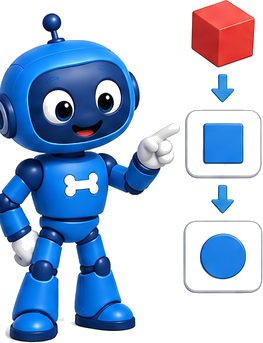
From real objects to pictures and symbols
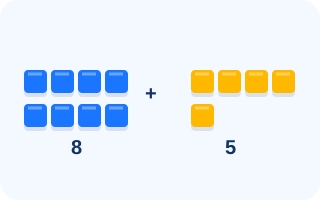
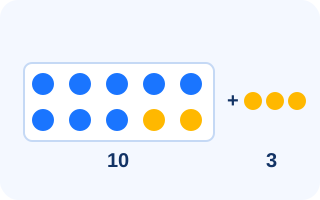
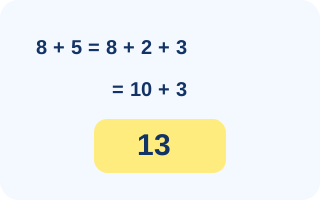
CPA (Concrete–Pictorial–Abstract) starts with hands-on experience, represents ideas in pictures, then connects them to numbers and symbols so learners can explain their thinking.
Explore with objects
Explore numbers, shapes and relationships through objects and activities.
Represent with pictures
Connect hands-on experience with pictures, diagrams, number bonds and bar models.
Connect with symbols
Use numbers, expressions, equations and graphs to explain and solve level-appropriate problems.
Check understanding along the way
A checkpoint after every four booklets reviews understanding, reasoning and application before progressing to the next level.
Where should my child start?
Children can begin at Pre Level from age 4. Learners with prior knowledge should start according to what they understand and can explain, rather than age alone.