
Secondary
Problem: draw two red balls
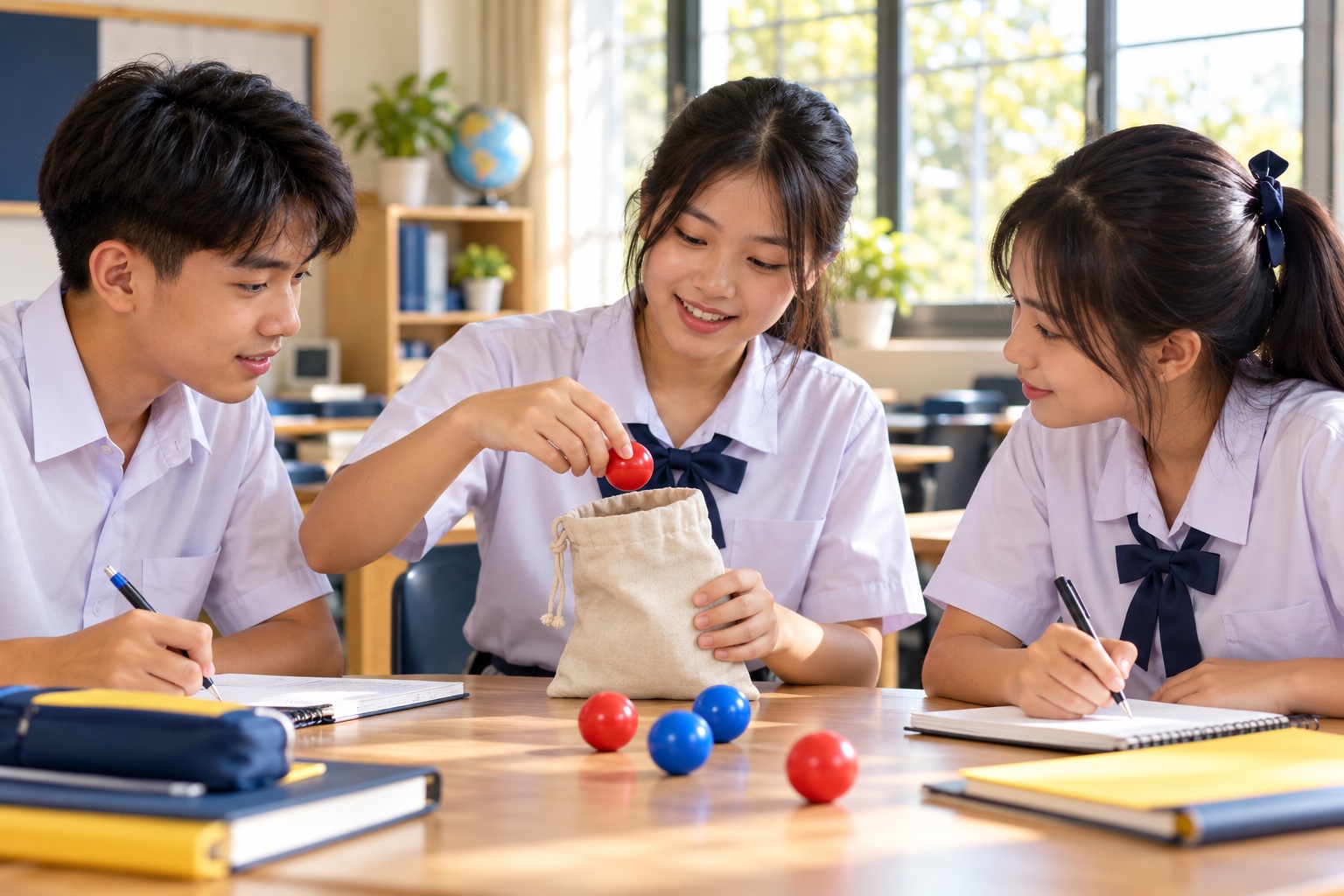
A bag contains 3 red and 2 blue balls, each equally likely to be selected. Draw twice without replacement. Find the probability that both balls are red.
Track what remains after the first draw
The first red probability is 3/5. If red is drawn, 2 red and 2 blue remain, so the conditional probability of another red is 2/4, not 3/5.
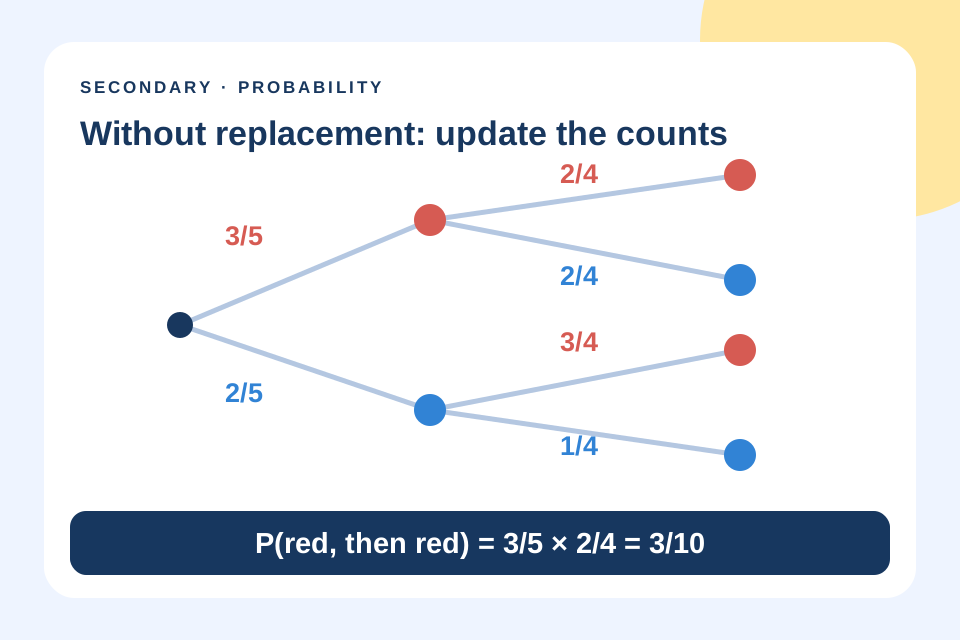
Follow the red-then-red path: first 3/5, then 2/4 because the first ball is not replaced.
View larger image ↗Multiply along the required path
The probability of two reds is (3/5) × (2/4) = 6/20 = 3/10. A tree diagram identifies each stage and explains the smaller second denominator.
Extend: replace the first ball
With replacement, the original counts return before the second draw. The probability becomes (3/5) × (3/5) = 9/25. Compare 3/10 and 9/25 using the remaining ball counts.
Keep exploring together
Choose activities that match the learner’s knowledge and readiness, and discuss what you notice. Explore the curriculum or parent guide below.